
Local SEO CTR: How Real Clicks Boost Your Google Maps and Local Pack Rankings
Local businesses live and die by Google Maps visibility. SerpClix uses 400,000+ real human clickers to boost your local SEO click-through rate, helping you dominate the local pack and drive more customers through your door.
 Start Your Free Trial →
Why Local SEO CTR Matters for Your Business
When someone searches "dentist near me" or "best plumber in Austin," Google serves up a local pack of three businesses alongside a map. That local pack receives the overwhelming majority of clicks for local searches. If your business is not in that top three, you are essentially invisible to the customers searching for exactly what you offer.
Local SEO click-through rate is the percentage of searchers who see your listing and actually click on it. A higher local SEO CTR does two critical things: it sends more potential customers to your Google Business Profile or website, and it sends a powerful ranking signal to Google that your business is relevant and popular for that search term.
Google's local ranking algorithm weighs three primary factors: relevance, distance, and prominence. What many business owners do not realize is that behavioral signals like CTR are a core component of prominence. When searchers consistently click on your listing over competitors, Google interprets that as a strong signal that your business deserves to rank higher.
Key insight: According to research, the top position in the local pack receives approximately 24% of all clicks, while the second and third positions receive roughly 14% and 10% respectively. Businesses outside the local pack receive a fraction of those clicks. Improving your CTR through strategic optimization is one of the most effective ways to break into and maintain a position in the local pack.
This is why savvy local business owners and SEO agencies are increasingly focused on local SEO CTR as a ranking lever. While traditional local SEO tactics like citation building and review management remain important, click-through rate optimization adds a behavioral dimension that can be the difference between ranking third and ranking first.
Consider the economics: for a local business, each position gained in the local pack can translate to dozens of additional calls, direction requests, and website visits per month. For high-value services like legal, dental, or home services, that can mean thousands of dollars in additional monthly revenue. Investing in targeted traffic that improves your local CTR often delivers an outsized return on investment.
How Google Ranks Local Businesses: The Role of CTR
Understanding how Google ranks local businesses is essential for any effective local SEO strategy. The local ranking algorithm is distinct from the organic algorithm, and it considers a unique set of signals that determine which businesses appear in the coveted local pack and Google Maps results.
Google Business Profile Signals
Your Google Business Profile (formerly Google My Business) serves as the foundation of local SEO. Google evaluates your business category, name, description, photos, hours, and completeness of your profile. These on-profile factors establish basic relevance and trustworthiness. However, having an optimized profile is necessary but not sufficient for strong local rankings — it is essentially table stakes.
Behavioral Signals and User Engagement
This is where Google Maps CTR and other behavioral signals enter the picture. Google tracks how users interact with local search results, including:
- Click-through rate: How often searchers click on your listing versus competitors
- Click-to-call actions: How frequently users tap the call button on your listing
- Direction requests: How often users request driving directions to your business
- Website visits: How many users click through to your website from the listing
- Dwell time: How long users spend on your listing or website after clicking
- Return-to-SERP rate: Whether users come back to search results quickly (a negative signal)
These behavioral signals function as a real-time quality check on your listing. When users consistently engage with your business listing — clicking, calling, requesting directions — Google gains confidence that your business is genuinely relevant and useful for those search queries. This is precisely why CTR affects SEO rankings so substantially.
The CTR-Ranking Feedback Loop
There is a powerful feedback loop at work in local SEO: higher rankings lead to more visibility, which leads to more clicks, which reinforces higher rankings. The challenge for businesses stuck on page two or three is that they never receive enough clicks to trigger this positive cycle. That is where strategic CTR optimization becomes essential. By driving real traffic to your listing, you can jumpstart this feedback loop and begin climbing the local rankings.
The local ranking equation: Google Business Profile optimization + Reviews + Citations + Behavioral Signals (CTR) = Local Pack Rankings. Many businesses focus on the first three factors but neglect the behavioral signals that can make the biggest difference in competitive markets.
Google Confirmed: Behavioral Signals Drive Local Rankings
For years, the SEO community debated whether click-through rate and other behavioral signals genuinely influenced search rankings. That debate has been largely settled. Google has made increasingly clear statements confirming that behavioral signals are a meaningful factor in how it ranks search results, including local results.
In leaked internal documents and public statements, Google representatives have acknowledged that user interaction data helps refine search quality. The logic is straightforward: if users consistently prefer one result over another for a given query, that preference data is valuable for improving future search results. In the context of local search, this means that GMB CTR and user engagement metrics directly influence which businesses appear in the local pack.
Our detailed analysis in "Google Confirmed: Behavioral Signals Now Drive Local Rankings" covers the specific evidence and timeline of Google's acknowledgment. The key takeaways are:
- Google uses interaction data as a quality signal for local search results
- Click-through rate is one of several behavioral signals Google monitors
- These signals are weighted more heavily in local search than in traditional organic search
- The impact of behavioral signals has increased over time as Google's systems have become more sophisticated
- Google's NavBoost system specifically processes click data to refine rankings
This confirmation has significant implications for local businesses. If you are investing in Google Business Profile optimization, citation building, and review generation but ignoring the behavioral dimension of local SEO, you are leaving a critical ranking factor on the table. Your competitors who understand the importance of Google Business Profile clicks and engagement signals will continue to outrank you in the local pack.
The good news is that behavioral signals are one of the most actionable local ranking factors. While you cannot easily change your proximity to the searcher or instantly generate dozens of new reviews, you can begin improving your local CTR today with a targeted strategy.
How SerpClix Boosts Local SEO CTR
SerpClix is the leading platform for improving your local SEO click-through rate using real human clickers. Unlike bot-based CTR services that use automated software (which Google can easily detect and ignore), SerpClix leverages a network of over 400,000 real people in 160+ countries who search for your keywords and click on your business listings.
Geographic Targeting for Local Results
Local SEO demands geographic precision. A dentist in Phoenix needs clicks from searchers in Phoenix, not from random locations around the world. SerpClix enables precise geographic targeting so that your clicks come from the locations that matter for your local rankings. You can target by country, region, or city to match the geographic profile of your actual customers.
Google Maps and Local Pack Click Targeting
SerpClix clickers can target multiple types of local results:
- Google Maps results: Clickers search your keywords and click on your business in Google Maps, generating engagement signals on your Maps listing
- Local pack results: Clickers find and click on your business in the three-pack that appears at the top of local search results
- Local organic results: Clickers click on your website when it appears in the standard organic results for local keywords
- Google Business Profile: Clickers engage with your Google Business Profile listing, boosting Google Business Profile clicks and interaction metrics
Real Humans, Not Bots
This distinction is critical. Google has sophisticated systems for detecting artificial click patterns from bots and automated tools. Bot clicks typically share telltale characteristics: identical browser fingerprints, datacenter IP addresses, unnaturally uniform click timing, and zero post-click engagement.
SerpClix clicks are fundamentally different because they come from real people using their own computers, browsers, and internet connections. Each clicker has a unique browsing history, unique browser fingerprint, residential IP address, and natural browsing patterns. The clicks they generate are indistinguishable from ordinary user behavior because they are ordinary user behavior.
Why real clicks matter for local SEO: Google's local algorithm is particularly sensitive to engagement quality. Local pack rankings change frequently based on user behavior patterns. Real human clicks generate the authentic engagement signals that Google's local algorithm responds to, while bot clicks are filtered out and can potentially harm your standing.
How a SerpClix Local Campaign Works
Create Your Order
You create an order specifying your target keywords (e.g., "emergency plumber Dallas," "family dentist near me") and set geographic targeting to match your service area.
Specify Your Targets
You specify the type of result to target (Maps, local pack, or organic). Real human clickers in your target area search your keywords on Google.
Watch Rankings Climb
They find your listing and click on it, spending time engaging with your content. These genuine engagement signals accumulate and influence your local rankings.
The result is a natural-looking pattern of user engagement that sends all the right signals to Google: real people in your local area are searching for your services and choosing your business from the results. This is exactly the kind of signal that Google's local algorithm rewards with higher rankings.
Ready to Boost Your Local Rankings?
Join thousands of local businesses using SerpClix to improve their Google Maps visibility with real human clicks.
Start Your Free Trial →Case Study: Florida PI Firm Goes from Position 52 to Page One in 14 Days
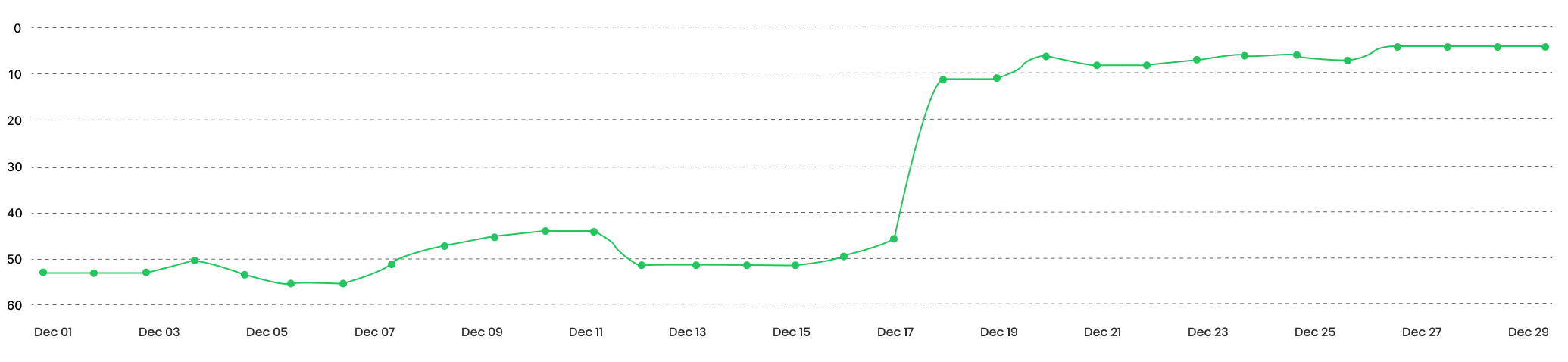
The impact of local SEO CTR optimization is best illustrated through real results. One of SerpClix's most compelling case studies involves a private investigation firm based in Florida that was struggling with local search visibility.
The Challenge
The firm offered private investigation services in a competitive Florida market. Despite having a well-optimized Google Business Profile, solid reviews, and a professional website, they were stuck at position 52 for their primary local keywords. For a business that relies almost entirely on local clients finding them through Google, being on page five or six was effectively the same as being invisible.
They had tried traditional local SEO tactics: optimizing their GBP categories and description, building local citations, encouraging more customer reviews, and improving their website content. While these efforts established a solid foundation, they were not enough to break through the competitive local pack in their market.
The SerpClix Strategy
The firm implemented a targeted SerpClix campaign focused on their primary local keywords. The key elements of their strategy included:
- Targeting local search terms specific to their Florida service area
- Focusing clicks on their Google Maps listing to boost Google Maps CTR
- Using geographic targeting to ensure clicks came from the Florida region
- Maintaining a consistent, natural-looking click pattern over the campaign period
The Results
Florida Private Investigation Firm
Within just 14 days of starting their SerpClix campaign, the firm moved from position 52 to page one for their primary local keywords. This dramatic improvement in Google Maps visibility translated directly to business results: the firm reported a 20-30% increase in phone calls from potential clients.
The firm's experience highlights a critical insight about local SEO: when a business has a solid foundation (good GBP optimization, reviews, citations) but is stuck in the rankings, CTR optimization can be the catalyst that unlocks dramatically higher positions. The behavioral signals generated by real clicks provided exactly the boost their listing needed to break through the competition.
This case study is particularly instructive because it demonstrates how quickly local rankings can respond to CTR optimization. Unlike national SEO campaigns that may take months to show results, local SEO CTR improvements often produce visible ranking changes within one to three weeks.
More SerpClix Success Stories
The Florida PI firm is far from the only business that has achieved strong results with SerpClix. Here are two additional case studies that demonstrate the effectiveness of CTR optimization across different scenarios:
We Sent 750 Organic Clicks To 7 URLs And Here's What Happened
Nova Solutions, a top SEO Firm based in Toronto, Canada, published this case study in which it tested 7 keywords and 7 different URLs (from 7 different domains).
All 7 of the URLs we studied saw a positive net movement of at least one position within 13 days.
CTR is a Ranking Factor
Coreter Media, a leading UK-based SEO firm, published a case study using keywords already ranking in the top 5 (average position of 4.7) and which received 800 - 1,000 searches per month.
After only a few days of sending around 15-25 users a day I jumped from 4.7 to 2.7 and kept rising to 1.7 after about a week.
"Within just 14 days of starting their SerpClix campaign, the firm moved from position 52 to page one for their primary local keywords."
Industries That Benefit Most from Local SEO CTR Optimization
While any local business can benefit from improved local SEO click-through rate, certain industries see particularly strong returns because of their reliance on local search visibility and the high lifetime value of each customer acquired.
Dental Practices
Searches like "dentist near me" have enormous local search volume. A single new patient can be worth thousands in lifetime revenue. Moving into the local pack drives a steady stream of new patient inquiries.
Law Firms
Legal services are among the most competitive and highest-value local search categories. Personal injury, family law, and criminal defense firms can see massive ROI from improved local pack visibility.
Plumbers & HVAC
Emergency service searches ("emergency plumber near me," "AC repair today") are overwhelmingly local and high-intent. Being in the top three results can mean the difference between a packed schedule and idle technicians.
Restaurants & Hospitality
Restaurant searches are inherently local and mobile-first. Higher Google Maps visibility directly translates to more reservations, walk-ins, and delivery orders. Google Maps CTR is particularly critical for restaurants.
Medical Practices
Patients increasingly find healthcare providers through local search. Dermatologists, chiropractors, optometrists, and other specialists all benefit from strong local pack rankings that drive appointment bookings.
Real Estate Agents
Real estate is hyper-local by nature. Agents and brokerages who rank in the local pack for "realtor in [city]" and "homes for sale [neighborhood]" capture high-intent leads at the moment of decision.
The common factor across all these industries is that local search intent leads directly to revenue. When someone searches "emergency plumber" or "dentist accepting new patients," they are ready to take action. Being visible at that moment — in the local pack, in Google Maps — is not just a marketing advantage; it is a business survival necessity.
Agencies that serve these industries are increasingly incorporating CTR optimization into their local SEO service packages. It provides a measurable competitive edge for clients and demonstrates clear value through rapid ranking improvements.
Your Industry Depends on Local Visibility
Whether you run a dental practice, law firm, or restaurant, SerpClix helps you dominate the local pack with real human clicks.
Start Your Free Trial →Local SEO CTR vs. National SEO CTR: Key Differences
While CTR optimization benefits both local and national SEO campaigns, there are important differences in how the two operate and the results you can expect. Understanding these differences helps you allocate your budget and set realistic expectations for your CTR optimization strategy.
| Factor | Local SEO CTR | National SEO CTR |
|---|---|---|
| Competition Level | Lower — competing against local businesses | Higher — competing against national brands |
| Speed of Results | Faster — often 1-3 weeks | Slower — typically 4-8 weeks or more |
| Geographic Signals | Critical — must match service area | Less important — broad targeting |
| Result Types | Local pack, Maps, GBP, local organic | Standard organic results |
| Ranking Volatility | Higher — local rankings shift more frequently | Lower — national rankings more stable |
| Click Intent | Very high — ready to call, visit, or buy | Varies — often informational |
| Clicks Needed | Fewer clicks can make a difference | More clicks typically required |
| ROI Potential | Very high for service businesses | Depends on monetization model |
Why Local Rankings Move Faster
One of the most encouraging aspects of local SEO CTR optimization is the speed at which results can appear. Local rankings tend to move faster than national rankings for several reasons:
- Smaller competitive pool: You are competing against dozens of local businesses rather than thousands of national websites
- Higher signal-to-noise ratio: Each click from a geographically relevant searcher carries more weight in the local algorithm
- Frequent ranking updates: Google's local algorithm updates more frequently than its organic algorithm, meaning ranking changes appear faster
- Behavioral signals weigh heavily: NavBoost and other behavioral systems have a proportionally larger impact on local results
- Lower domain authority threshold: You do not need massive backlink profiles to rank locally; behavioral signals can compensate
This speed advantage is why many SEO professionals consider local CTR optimization to be one of the most efficient uses of a local SEO budget. The combination of lower competition, faster results, and higher conversion intent creates a compelling value proposition.
When to Use Both Strategies
Many businesses benefit from running both local and national CTR campaigns simultaneously. A law firm, for example, might target local pack rankings for "personal injury lawyer Dallas" while also targeting organic rankings for informational queries like "what to do after a car accident." SerpClix supports both types of campaigns, allowing you to build comprehensive search visibility across local and organic results.
Getting Started with Local CTR Optimization
Launching a local SEO CTR campaign with SerpClix is straightforward. Here is a step-by-step guide to setting up your first campaign and maximizing your results:
Audit Your Current Local Rankings
Before starting, document your current positions for your target keywords in the local pack, Google Maps, and local organic results. This establishes your baseline so you can measure improvements. Use Google Search Console, Google Business Profile Insights, or a third-party rank tracker.
Identify Your Target Keywords
Focus on the local keywords that drive the most valuable traffic to your business. Prioritize terms that include your city or service area, service-specific terms ("emergency plumber," "family dentist"), and "near me" variations. Start with 3-5 primary keywords for your initial campaign.
Create Your SerpClix Account
Sign up for a free SerpClix account and explore the dashboard. The interface is designed to be intuitive, even for business owners who are not SEO experts.
Set Up Your First Click Order
Create a click order specifying your target keyword, the URL or listing you want clicked, and the type of result (Maps, local pack, or organic). Set your geographic targeting to match your service area.
Configure Geographic Targeting
This is crucial for local SEO. Set your targeting to the city, region, or country where your customers are located. Precise geographic targeting ensures your clicks match the searcher profile that Google expects for your local market.
Set Your Click Volume and Schedule
Start with a moderate volume that looks natural for your market. SerpClix allows you to control the number of daily clicks and the schedule, so you can build up gradually and maintain a natural pattern. For most local businesses, starting with 5-15 clicks per day per keyword is a good beginning.
Monitor and Adjust
Track your rankings daily during the first few weeks. You should begin seeing movement within 7-14 days. As your rankings improve, you may want to adjust your click volume, add new keywords, or shift focus to different result types.
Pro tip for local businesses: Combine your SerpClix campaign with ongoing Google Business Profile optimization. Keep your GBP profile updated with fresh photos, posts, and responses to reviews. The combination of strong on-profile signals plus enhanced behavioral signals from SerpClix clicks creates a powerful one-two punch for local rankings.
Pricing and Plans
SerpClix offers flexible pricing that scales with your needs. Whether you are a single-location business looking to boost visibility for a few key terms or an agency managing campaigns for multiple clients, there is a plan that fits. Click orders are priced based on the number of clicks, with volume discounts available for larger campaigns.
For local businesses with tight budgets, even small campaigns can produce meaningful results. Because local competition is typically lower than national competition, a modest investment in CTR optimization can deliver ranking improvements that would require significantly larger budgets in national SEO.
View current pricing and plans to find the right option for your business.
Dominate Your Local Market
Start sending real human clicks to your Google Maps and local pack listings today. See results in as little as one to two weeks.
Start Your Free Trial →Advanced Local CTR Strategies
Once you have a basic local CTR campaign running, there are several advanced strategies that can amplify your results and help you maintain top positions long-term.
Multi-Keyword Campaigns
Rather than focusing all your clicks on a single keyword, spread your campaign across multiple related local terms. A dental practice, for example, might target "dentist [city]," "emergency dentist near me," "teeth whitening [city]," and "pediatric dentist [city]" simultaneously. This builds broad local search authority and makes your ranking improvements more resilient.
Seasonal Adjustments
Many local businesses experience seasonal demand fluctuations. HVAC companies see more searches in summer and winter, tax professionals peak in spring, and restaurants may see holiday rushes. Align your CTR campaign volume with these seasonal patterns to maximize impact when competition is highest and search volume peaks.
Competitor Analysis
Study which businesses currently occupy the local pack for your target keywords. Analyze their Google Business Profile completeness, review counts, and posting activity. Use this intelligence to identify gaps in their strategy that you can exploit. If a competitor has strong reviews but low engagement signals, CTR optimization can be your competitive advantage.
Combining CTR with Review Strategy
Local rankings respond to multiple signals simultaneously. While SerpClix handles the behavioral and CTR component, pair your campaign with an active review generation strategy. Businesses with both strong engagement signals and strong reviews consistently outperform those focusing on only one factor.
Multi-Location Management
For businesses with multiple locations or agencies managing multiple clients, SerpClix supports running parallel campaigns for each location. Each location can have its own set of target keywords, geographic targeting, and click volumes. This is why agencies increasingly rely on SerpClix as a core component of their local SEO service offering.
The Complete Picture: Local SEO Ranking Signals in 2025
To put CTR optimization in proper context, it helps to understand the full landscape of local SEO ranking signals and how they work together. Google's local algorithm considers a complex mix of factors, and the most successful local SEO strategies address multiple signal categories simultaneously.
On-Profile Signals
Your Google Business Profile categories, name, description, attributes, hours, photos, and posts. These establish basic relevance and help Google understand what your business offers and where it operates.
Review Signals
The quantity, quality, velocity, and diversity of your Google reviews. Recent reviews carry more weight than older ones, and responses to reviews also contribute positively. Reviews provide both relevance signals (through keywords in review text) and trust signals.
Citation Signals
Your business name, address, and phone number (NAP) consistency across directories, websites, and platforms. Citations help Google verify your business information and establish geographic relevance.
Link Signals
Backlinks to your website from local and relevant sources. Local chamber of commerce links, local news mentions, and links from other local businesses all contribute to local authority.
Behavioral Signals (Where CTR Lives)
This is where SerpClix operates. Click-through rate, click-to-call rate, direction requests, website visits, dwell time, and other user engagement metrics. These signals are increasingly important because they provide real-time, user-generated validation of your business's relevance and quality. Unlike citations or links, behavioral signals are difficult to fake with bots — which is why real human clicks from SerpClix are so effective.
On-Page Website Signals
Your website's local relevance signals, including local keywords in title tags and content, NAP on your website, local schema markup, and mobile-friendliness. These signals help Google connect your website to your Google Business Profile and local intent.
The strategic insight: Most local businesses already have reasonable on-profile, review, and citation signals. These are well-understood and widely implemented tactics. Behavioral signals represent the most under-optimized and highest-opportunity ranking factor for most local businesses. This is why adding CTR optimization to an existing local SEO strategy often produces the largest marginal improvements. Read our complete SEO resource hub for more strategies.
Frequently Asked Questions
Why SerpClix Is the Smart Choice for Local SEO CTR
The local SEO landscape has evolved significantly. Google's algorithm now places substantial weight on behavioral signals and user engagement data when determining local rankings. Businesses that understand and act on this reality have a significant competitive advantage.
SerpClix stands apart from other CTR solutions for several critical reasons:
- Real human clickers, not bots: Over 400,000 genuine users who search and click using their own devices and connections
- Precise geographic targeting: Target clicks from the exact cities and regions where your customers search
- Proven local results: Documented case studies showing rapid ranking improvements for local businesses
- Google Maps and local pack targeting: Specifically designed to boost visibility in the local results that matter most
- Scalable for agencies: Manage multiple locations and clients from a single platform
- Transparent reporting: Track every click and monitor your campaign performance in real time
Whether you are a solo local business owner looking to break into the local pack for the first time, or an agency seeking to deliver measurable results for your local SEO clients, SerpClix provides the real human engagement signals that Google's local algorithm rewards.
The businesses that dominate local search in the coming years will be those that go beyond basic optimization and actively manage every ranking signal at their disposal — including the behavioral signals that CTR optimization delivers. Do not let your competitors claim the top local pack positions while you wait.
Explore More SEO Resources
Start Boosting Your Local SEO CTR Today
Join the thousands of local businesses and agencies using SerpClix to dominate Google Maps and the local pack. Real human clicks. Real ranking improvements. Real business growth.