
Increase Organic Traffic: Proven Strategies to Grow Your Search Visibility
Organic search remains the single largest source of website traffic on the internet. But growing it is harder than ever. Competition is increasing, Google's algorithm is evolving, and the old playbook of "publish and pray" no longer works. If you want to increase organic traffic, you need a multi-layered strategy — one that addresses content, technical health, authority, and the engagement signals that Google's ranking systems actually measure.
This guide covers the strategies that work in 2026, from content optimization and technical SEO to the click-through rate signals that Google's NavBoost system uses to decide which results deserve to rank. We will cover what moves the needle, what wastes your time, and how SerpClix accelerates results by generating real engagement from 400,000+ human clickers.
Start Your Free Trial →What Is Organic Traffic — and Why Does It Matter?
Organic traffic is the visitors who reach your website by clicking on unpaid results in search engines like Google. Unlike paid ads, social media referrals, or direct visits, organic traffic represents people who are actively searching for what you offer and finding you through relevance, not promotion.
This matters for several reasons:
- Intent. Organic visitors are searching for specific information, products, or services. They have a problem and are looking for a solution. This makes organic traffic one of the highest-converting traffic sources available.
- Compounding value. Unlike paid advertising, which stops delivering traffic the moment you stop paying, organic rankings compound over time. A page that ranks well continues generating traffic for months or years with no per-click cost.
- Scale. Google processes over 8.5 billion searches per day. Even capturing a tiny fraction of relevant searches can deliver significant, sustained traffic to your site.
- Trust. Users trust organic results more than ads. Studies consistently show that organic listings receive the majority of clicks even when paid ads appear above them.
The challenge is that everyone wants organic traffic, and the competition for it is intense. Growing organic search traffic requires understanding what Google actually rewards — and building a strategy around those signals.
Why Organic Traffic Is Declining for Many Sites
Before we talk about how to increase organic traffic, it helps to understand why so many sites are seeing it decline.
Google algorithm updates
Google rolls out thousands of algorithm changes per year, with several major core updates that can significantly reshuffle rankings. These updates increasingly reward content that demonstrates expertise, direct experience, and genuine value.
Increased SERP competition
More businesses are investing in SEO than ever before. The page-one results that you used to dominate may now feature competitors with larger content teams, bigger budgets, and more sophisticated strategies.
SERP feature expansion
Google has progressively added features like featured snippets, People Also Ask boxes, knowledge panels, and AI overviews that answer queries directly on the search results page. This "zero-click search" trend means some queries that used to drive traffic to your site now get answered without a click.
Declining click-through rates
Even if your rankings have not changed, your traffic may be declining because fewer people are clicking your listing. Competitors with better title tags, richer snippets, or more compelling meta descriptions may be capturing clicks that used to be yours. Improving your CTR is one of the fastest ways to recover lost traffic.
Technical debt
Slow page speeds, crawl errors, broken links, mobile usability issues, and indexing problems accumulate over time. Each one creates a small drag on your rankings.
The good news: every one of these problems has a solution. The strategies in this guide address each of them directly.
Strategy 1: Optimize Your Existing Content
The fastest way to grow organic search traffic is often to improve what you already have. Pages that currently rank on page two or at the bottom of page one are your biggest opportunities.
Audit your current content
Start with Google Search Console. Look at pages that receive impressions but have low click-through rates, and pages ranking in positions 5 through 20. These are your prime candidates for optimization.
Update and expand thin content
If a page targets an important keyword but provides only surface-level coverage, expand it. Add depth, examples, data, and actionable advice.
Match search intent precisely
Search intent is the reason behind a query. If your page for a keyword immediately tries to sell something instead of teaching, it is misaligned with intent, and Google will notice (because users will bounce back to search results, sending negative signals to NavBoost).
Refresh outdated information
Content with outdated statistics, references to old tools, or strategies that no longer work sends a signal that your page is stale.
Improve internal linking
Internal links help Google understand your site structure and distribute authority across your pages. If you have a page about CTR manipulation and another about NavBoost, they should link to each other.
Strategy 2: Fix Technical SEO Issues
Technical SEO is the foundation that everything else sits on. If Google cannot properly crawl, index, and render your pages, no amount of content quality or link building will help.
Page speed optimization
Google uses page speed as a ranking signal. Compress images, minimize JavaScript, leverage browser caching, and use a CDN.
Mobile usability
Google uses mobile-first indexing, meaning it primarily evaluates the mobile version of your site for ranking purposes.
Crawl and index management
Ensure your XML sitemap is current and submitted to Google Search Console. Check for crawl errors, broken links, and redirect chains.
Core Web Vitals
Google's Core Web Vitals — Largest Contentful Paint (LCP), Interaction to Next Paint (INP), and Cumulative Layout Shift (CLS) — measure real-user experience on your site.
Structured data markup
Adding schema markup helps Google understand your content and can generate rich snippets in search results. Rich snippets increase your visual footprint on the SERP, which directly increases your click-through rate.
Technical SEO produces some of the fastest traffic gains because you are not creating something new — you are removing obstacles that prevent your existing content from ranking where it should.
Already Ranking but Not Getting Clicks?
SerpClix can help. Real human clicks from 400,000+ clickers boost your CTR and send engagement signals that push your rankings higher.
Start Your Free Trial →Strategy 3: Improve Your Click-Through Rate
This is where many organic traffic strategies fall short. You can have great content, clean technical SEO, and solid backlinks — but if people are not clicking your listing when they see it in search results, you are leaving traffic on the table.

Why CTR matters more than you think
The 2023 DOJ antitrust trial confirmed that Google's NavBoost system uses click-through rate as a direct ranking signal. Consider the math: a page ranking in position 5 with a 5% CTR that improves to 8% CTR has not just gained 60% more traffic from that position. The improved engagement signals feed into NavBoost, which can push the page higher. This is the CTR flywheel effect.
Write compelling title tags
Your title tag is the headline of your search listing. Effective title tags include the target keyword naturally, use numbers and specifics, add emotional hooks, stay under 60 characters, and clearly communicate what the searcher will get by clicking.
Optimize meta descriptions
Write them as a short pitch for your page — explain what the reader will learn or gain, include the target keyword naturally, and add a subtle call to action.
Use structured data for rich snippets
FAQ schema, review stars, how-to markup, and other structured data can add visual elements to your search listing that make it stand out.
Boost CTR with real human clicks
Beyond on-page optimization, you can directly improve your CTR signal through services like SerpClix. When real humans search your keywords on Google and click your listing, those clicks feed into NavBoost as genuine engagement signals. This is real people on real devices performing real searches.
Strategy 4: Build Quality Backlinks
Backlinks remain an important ranking factor, even as engagement signals gain relative weight.
Focus on relevance over volume
Ten links from relevant, authoritative sites in your industry are worth more than a hundred links from unrelated directories.
Create link-worthy content
Original research, comprehensive guides, data analysis, unique frameworks, and expert interviews all attract natural links.
Guest posting and digital PR
Contributing expert content to industry publications and building relationships with journalists can generate high-quality backlinks.
Reclaim lost and broken links
Use tools like Ahrefs or Google Search Console to identify backlinks you have lost and pages on other sites that link to your broken URLs.
The modern reality: Backlinks still matter, but they are no longer sufficient on their own. The most effective approach combines backlink authority with engagement signals that Google's CTR-based ranking systems reward.
Strategy 5: Create New Content That Targets Gaps
After optimizing existing content, the next lever is creating new pages that target keywords and topics you are not yet covering.
Keyword gap analysis
Use SEO tools to identify keywords your competitors rank for that you do not.
Topic clusters and content hubs
Build topic clusters — a pillar page that covers a broad topic linked to supporting pages that cover subtopics in depth (like our pages on CTR manipulation, NavBoost SEO, and local SEO CTR).
Target long-tail keywords
Long-tail keywords are less competitive and often convert better because they indicate specific intent.
Match the content format to the intent
Before creating a new page, search the target keyword and look at what Google currently ranks. Match the format that Google has determined users want for that query.
Strategy 6: Leverage Local SEO (for Location-Based Businesses)
If your business serves specific geographic areas, local SEO is one of the most effective ways to boost organic traffic.
Optimize your Google Business Profile
Ensure it is complete, accurate, and regularly updated with posts, photos, and responses to reviews.
Build local citations
Consistent name, address, and phone number (NAP) information across directories reinforces your geographic relevance.
Target location-specific keywords
Create content that targets keywords with geographic modifiers relevant to your business.
Generate local engagement signals
SerpClix enables you to target clickers in specific geographic regions, generating locally relevant CTR and dwell time signals.
Ready to Grow Your Organic Traffic?
Combine your SEO strategy with real human engagement signals. SerpClix delivers clicks from 400,000+ real people in 160+ countries.
Start Your Free Trial →Comparing Organic Traffic Growth Strategies
Not all strategies work at the same speed, cost, or difficulty level.
| Strategy | Time to Impact | Difficulty | Cost | Best For |
|---|---|---|---|---|
| Content optimization | 2–8 weeks | Moderate | Low (time) | Sites with existing content that underperforms |
| Technical SEO fixes | Days to weeks | Moderate to high | Low to moderate | Sites with crawl errors, slow speed, or indexing issues |
| CTR optimization (SerpClix) | Days to weeks | Low | Moderate | Keywords ranking on pages 1–2 that need a push |
| Backlink building | Months | High | High | Competitive keywords requiring authority signals |
| New content creation | 2–6 months | Moderate | Moderate to high | Expanding into new keyword territories |
| Local SEO | Weeks to months | Moderate | Low to moderate | Location-based businesses |
The most effective approach is a combination. Start with the fastest wins — fix technical issues and optimize CTR on existing rankings — then layer in content optimization, new content, and link building for sustained growth.
How Google Actually Ranks Results: The Role of Engagement Signals
Understanding how Google decides which pages rank helps you focus on the signals that matter most.
Content relevance
Does your page match what the searcher is looking for?
Authority and trust
Does your site have the credibility to rank for this topic? Backlinks, domain history, author expertise, and brand recognition all contribute.
User engagement (NavBoost)
Do real users interact positively with your search listing? Google's NavBoost system — confirmed during the 2023 DOJ antitrust trial — processes click-through rate, dwell time, and return-to-SERP behavior over a 13-month rolling window.
Technical quality
Can Google efficiently crawl, render, and index your pages?
Most SEO advice focuses heavily on content and backlinks while treating engagement signals as an afterthought. But the NavBoost revelation has changed the equation. Evidence suggests that engagement signals are gaining weight relative to traditional factors like backlinks.
How SerpClix Accelerates Organic Traffic Growth
Every strategy in this guide works. Content optimization, technical SEO, backlink building — they all contribute. But they all share a limitation: they are slow. SerpClix addresses the engagement signal layer — the one factor that can produce measurable ranking changes in days, not months.
Choose Your Target Keywords
Identify the keywords where you want to grow organic traffic. The best candidates are keywords where you already rank on page one or two.
Real Humans Search and Click
SerpClix's network of 400,000+ real clickers search your keywords on Google from their own devices, with their own residential IPs, in 160+ countries.
Engagement Signals Flow into NavBoost
Each click generates genuine CTR and dwell time data that passes through Google's authenticity filters and feeds into NavBoost.
Rankings Improve, Organic Traffic Grows
As your engagement signals strengthen, your rankings improve. Higher rankings mean more organic visibility, and the CTR flywheel takes over.
Why SerpClix works when bots do not: Google's detection systems filter out automated clicks. SerpClix uses real humans on real devices, so the engagement data is indistinguishable from any other organic search interaction. Read more about why traffic bots fail.
The Engagement Layer Most SEO Strategies Miss
Content and links are table stakes. SerpClix adds the CTR signal that Google's NavBoost system actually rewards.
Start Your Free Trial →Why Bot Traffic Does Not Increase Organic Traffic
If you search for ways to boost organic traffic, you will encounter services that promise to send thousands of visitors for a few dollars. These services use bots and they are worthless for SEO.
Google filters bot clicks before they count
Google's detection systems evaluate every click for authenticity using behavioral analysis, browser fingerprinting, IP reputation databases, and machine learning.
Bot traffic pollutes your analytics
Sessions with zero engagement, instant bounces, and meaningless pageviews make it harder to identify what is actually working.
- Bot clicks: Automated, datacenter IPs, synthetic fingerprints, zero engagement, filtered by Google
- Click farms: Low-quality, often automated at scale, detectable patterns
- Traffic exchanges: Forced, non-intentional visits with no search signal value
- Direct URL visits: Do not generate search engagement signals at all
- SerpClix: Real humans, real devices, residential IPs, genuine search behavior, meaningful dwell time, undetectable
Case Studies: Real Organic Traffic Growth Results
These case studies show what happens when real human engagement signals meet Google's ranking systems.
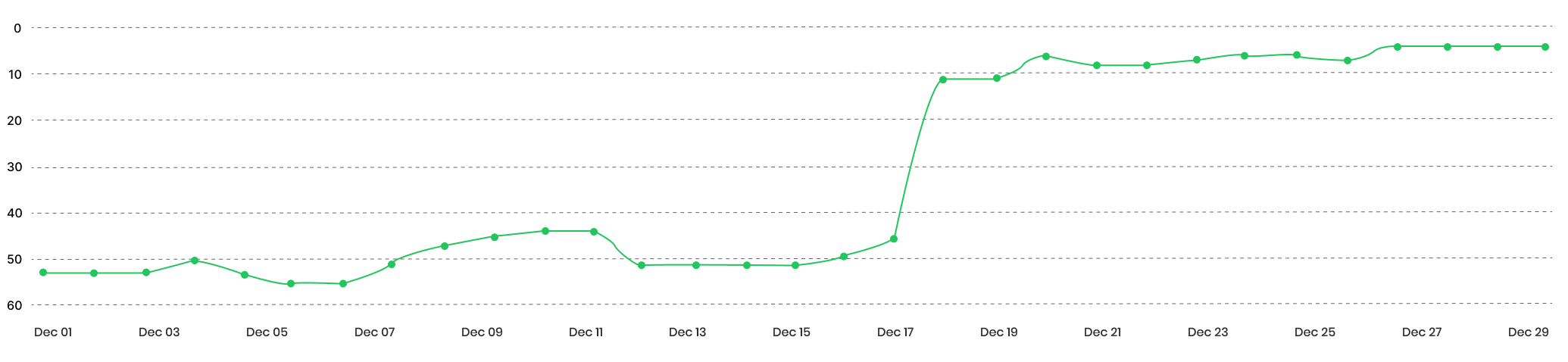
Nova Solutions
Nova Solutions targeted seven competitive keywords across their service pages. Within 13 days of starting their SerpClix campaign, all seven keywords reached Google's first page. The organic traffic increase was immediate and measurable — moving from page two to page one is the single biggest traffic jump in SEO, since fewer than 1% of searchers click past the first page of results. As rankings improved, organic CTR increased naturally, creating a self-reinforcing cycle of growth.
Coreter Media
Coreter Media was ranking in the mid-page-one range but not getting the traffic volume that top-three positions deliver. Within one week of starting SerpClix, their average position improved from 4.7 to 1.7. The organic traffic impact was dramatic: position 1 receives roughly 27% of all clicks, while position 5 receives about 5%. Moving from one to the other represents a 5x increase in organic traffic from a single keyword — all from improving engagement signals.
Florida PI Firm
A Florida-based private investigation firm was buried on page five despite having strong on-page SEO. Their content was good, but it was not getting the engagement signals needed to compete. After two weeks of targeted SerpClix clicks, they jumped from position 52 to position 1 — going from effectively invisible in search to the top result. The organic traffic growth was transformative for a local business where each new client represents significant revenue.
How to Measure and Track Organic Traffic Growth
You cannot improve what you do not measure.
Key metrics to track
- Organic sessions. The total number of visits from organic search.
- Impressions. How often your pages appear in search results.
- Click-through rate. The percentage of impressions that result in clicks.
- Average position. Your average ranking for each keyword.
- Pages per session and time on site. Engagement metrics.
- Conversion rate from organic traffic. Ultimately, traffic is only valuable if it drives outcomes.
Setting up proper tracking
At minimum, you need Google Search Console and Google Analytics. Review your metrics weekly.
Common Mistakes That Stall Organic Traffic Growth
- Targeting keywords that are too competitive.
- Ignoring search intent.
- Neglecting existing content.
- Relying on a single strategy.
- Using bot traffic to fake engagement. Only real human traffic generates the engagement signals that Google rewards.
- Not measuring what matters.
- Expecting overnight results.
Avoid the Biggest Mistake: Ignoring Engagement Signals
Google confirmed that clicks move rankings. SerpClix delivers the real human clicks that make it happen.
Start Your Free Trial →Building a Complete Organic Traffic Growth Strategy
The most successful approach layers multiple strategies together.
Phase 1: Quick wins (weeks 1–4)
- Fix critical technical issues. Crawl errors, broken links, slow pages
- Optimize CTR on existing rankings. Improve title tags and start a SerpClix campaign for keywords on pages 1–2
- Add structured data markup. FAQ schema, review schema for rich snippets
Phase 2: Content optimization (weeks 2–8)
- Audit and update existing content.
- Improve internal linking.
- Align content with search intent.
Phase 3: Expansion (months 2–6)
- Create new content for keyword gaps.
- Build quality backlinks.
- Expand geographic targeting. Use local SEO strategies and SerpClix's geographic targeting
Phase 4: Compounding (ongoing)
- Monitor and adjust. Review metrics weekly
- Maintain the flywheel. Continue SerpClix campaigns to sustain engagement signals
- Iterate on content. Continuously update your best-performing pages
Getting Started with SerpClix
If you are ready to add engagement signal optimization to your organic traffic strategy, setting up SerpClix takes minutes.
Create Your Free Account
Sign up at SerpClix.com. No payment required.
Add Your Keywords and URLs
Enter the search terms you want to target and the pages you want clickers to find.
Monitor Results
Track click completion in your SerpClix dashboard and ranking changes in Google Search Console.
SerpClix works alongside every other strategy in this guide. It is the engagement signal layer that most organic traffic strategies are missing.
Frequently Asked Questions
Related SEO Resources
- SEO Hub: All Guides
- CTR Manipulation
- NavBoost SEO
- Buy Organic Traffic
- Buy Google Traffic
- Buy Real Website Traffic
- Local SEO CTR
- Buy Website Clicks
- Buy SEO Traffic
- Buy Targeted Traffic
From the Blog
- How to Increase CTR
- CTR Manipulation
- Does Click-Through Rate Affect Organic SEO Rankings?
- The CTR Flywheel: How Better Clicks Compound
- Sterling Sky CTR Experiment: Clicks Move Rankings
- Backlinks Losing Weight, Engagement Gaining
- Organic Traffic Bot
- Google Trust Score Patent: Click Behavior & Authority
- Federal Court Forces Google to Share NavBoost Click Data
Increase Your Organic Traffic with Real Human Engagement
Great content, solid technical SEO, and quality backlinks get you to the table. Real engagement signals get you to the top. SerpClix delivers the genuine human clicks that Google's NavBoost system rewards — from 400,000+ real clickers on their own devices in 160+ countries.